
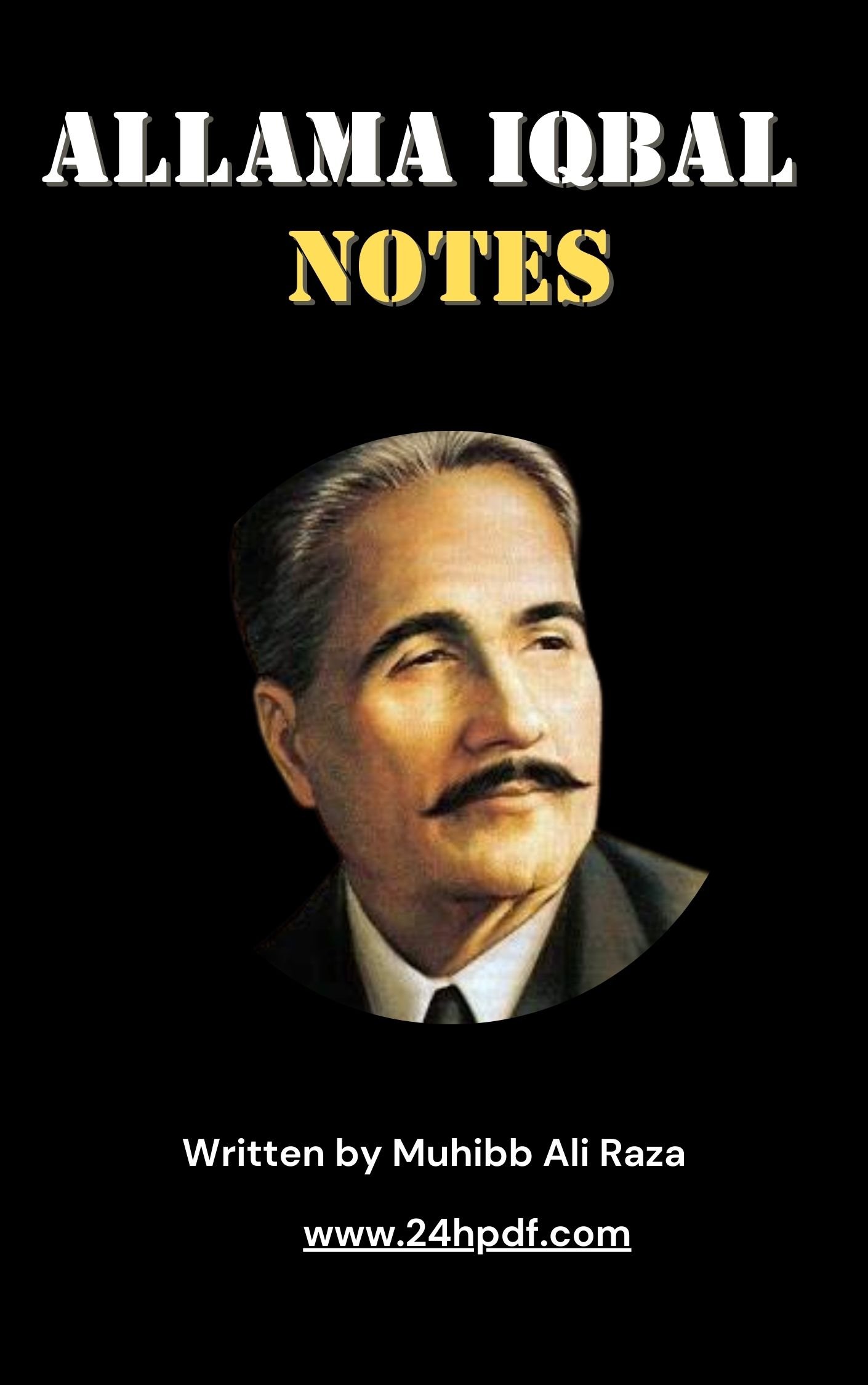
Allama Iqbal Handwritten Notes PDF | Ideology of Pakistan & Allahabad Address
Author: Muhibb Ali Raza Category: 10th class, 12th class, All Departments, Biography, MA English, Notes Publisher: Taleem Ki Duniya Pages: 8 Language: English, Urdu Dimension: A4 page File Size: 1.63 MB More Details
Welcome to 24hpdf.com. If you are looking for comprehensive, clear, and high-quality handwritten study notes on Allama Muhammad Iqbal and his contribution to the Ideology of Pakistan, you have come to the right place and right platform.
These notes, written by Muhibb Ali Raza, cover everything you need for exams (F.A., B.A., M.A., CSS, PMS, and Board Exams) regarding Iqbal’s political career, the Two-Nation Theory, and the Allahabad Address (1930).
Key Highlights of the Notes
1. Introduction & Initial Life of Allama Iqbal
-
Birth & Early Life: Allama Muhammad Iqbal was born on Friday, November 9, 1877, in Sialkot.
-
Education:
-
Early education at Mission School, Sialkot.
-
F.A from Murray College, Sialkot.
-
M.A in Philosophy from Government College University, Lahore.
-
Ph.D from Munich University, Germany in 1905.
-
2. Political Career & Role in Pakistan’s Creation
-
Entry into Politics: In 1926, Iqbal was elected as a member of the Punjab Imperial Legislative Council (PILC).
-
Building the Muslim State:
-
Sir Syed Ahmad Khan laid the foundation through the Aligarh Movement and separate electorates.
-
Maulana Mohammad Ali Jauhar brought mass political awareness via the Khilafat Movement.
-
Allama Iqbal provided the structural blueprint for a separate Muslim homeland through his historical speeches and philosophy.
-
3. Allama Iqbal & The Two-Nation Theory
Allama Iqbal strongly believed that Muslims and Hindus are two distinct nations with separate cultures, ideologies, and ways of life.
-
Islam as a Complete Code of Life: Iqbal emphasized that Islam is not just a religion, but a complete system of guidance.
-
Definition of Nationhood: He famously rejected territorial nationalism, stating that:
“Nations are based on religion, not territories. We are a separate nation because we have our own ideology.”
4. The Allahabad Address (1930)
In his presidential address at Allahabad in 1930, Allama Iqbal clearly demanded a separate Muslim state:
“I would like to see the Punjab, NWFP, Sindh, and Baluchistan amalgamated into a single state. Self-government within the British Empire or without the British Empire, the formation of a consolidated North-West Indian Muslim state appears to me to be the final destiny of the Muslims, at least of North-West India.”
Why Study These Notes from Taleem Ke Duniya?
-
Exam-Oriented: Structured specifically with headings, quotes, and bullet points to help students score maximum marks.
-
Authentic Quotes: Includes exact historical statements from Allama Iqbal’s speeches.
-
Easy to Learn: Written in clear, concise language for quick revision.